Monday, October 28, 2013

Italian Violin Makers in Argentina

By Andy Fein, luthier at Fein Violins

One quintessential quest of many musicians is to find an instrument that gives you that wonderful Stradivarius or Guarnerius sound, at a fraction of the cost. There are any number of possibilities to fulfilling that quest.

One possibility, one that I particularly like, is to find an instrument made by many of the wonderful Italian makers working in the early part of the twentieth century. Many of these instruments are made with outstanding craftsmanship and sound wonderful!

Another possibility, albeit rarer, is to find one of the fine instruments made in Argentina by Italian violin makers, particularly those of the early twentieth century.
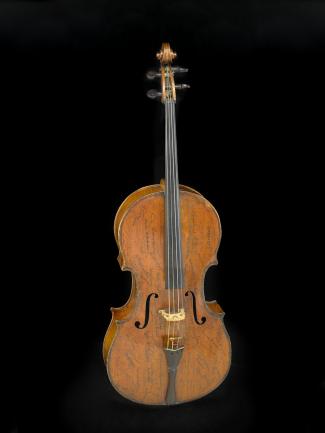
The cello made by Luigi Rovatti for Ennio Bolognini


Sunday, October 20, 2013

Orchestra Apps: The Symphonic Future?

Written by Joe Peterson of Fein Violins

1.08 billion people. That's around a fifth of the worlds population, and also the number of people who use smartphones (Here's an info-graph showing worldwide Smartphone usage). Nowadays, it's hard to think of a business that can't be accessed on a smartphone through the use of an app or a mobile site, because, chances are, they have one. You have a Chipotle Burritos app, a Starbucks app, a Netflix app, a Best Buy app, the list goes on for miles. Oh yeah, and Fein Violins has one. Go ahead, click to our mobile site.

a bassoon app, a conductor app...


But now, amidst all of the burritos and Frappes and Batman and TVs, there are

Saturday, August 17, 2013

Huguette Clark, a few hundred million dollars, a Cezanne painting and several Stradivaris. Eccentric?

By Andy Fein, violin maker at Fein Violins

Huguette Clark passed away in 2011 at the age of 104. She spent the last twenty years of her life living in a hospital room at Beth Israel Hospital in New York City. Not that she needed the hospital room. Or the hospital. Or much attention from doctors and nurses. But she had the money to pay for the twenty year visit and that's where she felt most comfortable. Eccentric? Maybe. Wasteful? Maybe. (She could have spent those years quite comfortably in her 42 room Fifth Ave. apartment, or her estates in California or Connecticut).

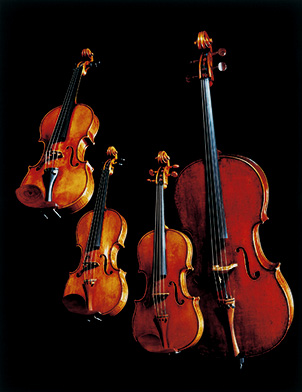
The Paganini Quartet of Stradivarius instruments
But it was her money, so who cares? Her distant family. They received a big, fat portion of Bubkis in her will.

Why would I care about this heiress or the legal fight over her estate? Violins, of course. Stradivaris. Several of them. And it's a great story.

Sunday, August 4, 2013

The String Instrument FAQ

Written by Andy Fein, luthier at Fein Violins
 and Ben Schuneman

We get tons of questions every day, from friends and customers, about violins. Some are humorous to those of us who are around these instruments every day and know the terminology, but all are asked in complete and earnest sincerity. This will be a running blog that will get refreshed every so often. Enjoy!

"I have a Stradivarius that I found in my attic! It must be one of those lost treasures you hear about all the time! Is it worth millions?"


Thursday, July 18, 2013

Equal and Just Temperament -- They Have Nothing to Do with How Well You Behave

Written by Matt Lammers of Fein Violins

We've all been there: you've practiced your quartet part well. You know the notes and can play them. You head into rehearsal confident that the opening chords will slot beautifully into place, but are greeted instead by beat frequencies, colleagues frowning at each other, and self-depricating, frustrated remarks like, "well, I guess this'll never be in tune". So you go home and sit in front of a tuner...and it gives you a nice little beep and green light, as if to say, "congrats! You're perfect!" Alas, you know you aren't. Rather than putting your temper to the test, let's put temperament to the test.

Simply put, temperament is the spacing between the pitches in a scale; it defines the sizes of intervals. Take the most notorious temperament issue for example: the third in a major or minor chord. Let's say the third of either chord is A (this means our major and minor keys are F-Major/FM and f#-minor/f#m). If you were to play an A in an FM chord at the pitch your tuner says is correct, you would find that your A sounds sharp (see video). If you were to play that same exact tuner-tuned A in am f#m chord, it would sound flat. In either case your A, which is supposedly in tune, sounds out of tune in reality. Don't blame your colleagues, blame physics. If you haven't encountered this issue before, watch our video that demonstrates the problem: