Monday, October 29, 2018

All About Tailpieces- Long, Short, and Fine Tuned


By Andy Fein, Luthier at Fein Violins
and Ivana Truong
with comparison videos by Diane Houser and Megan Scott
A Schmidt Harp Style tailpiece made from Pernambuco

Tailpieces do far more than hold your strings on to your instrument. And then there's the BIG question of how many fine tuners to use, if any. One? Two? Four? None?

What sounds best? Or- does it affect your tone and playability at all?

Pernambuco tailpiece with four fine tuners made by Bois d'Harmonie


Tuesday, October 16, 2018

Eva Mudocci- Violinist and Muse for Edvard Munch.

By Andy Fein, Luthier at Fein Violins and
Ivana Truong

You know those stories about a picture or a violin or something turning up in grandma's attic after being stored away for 50 years? Very infrequently, it's actually something worth taking a second look at. Even less frequently, it's something of value.

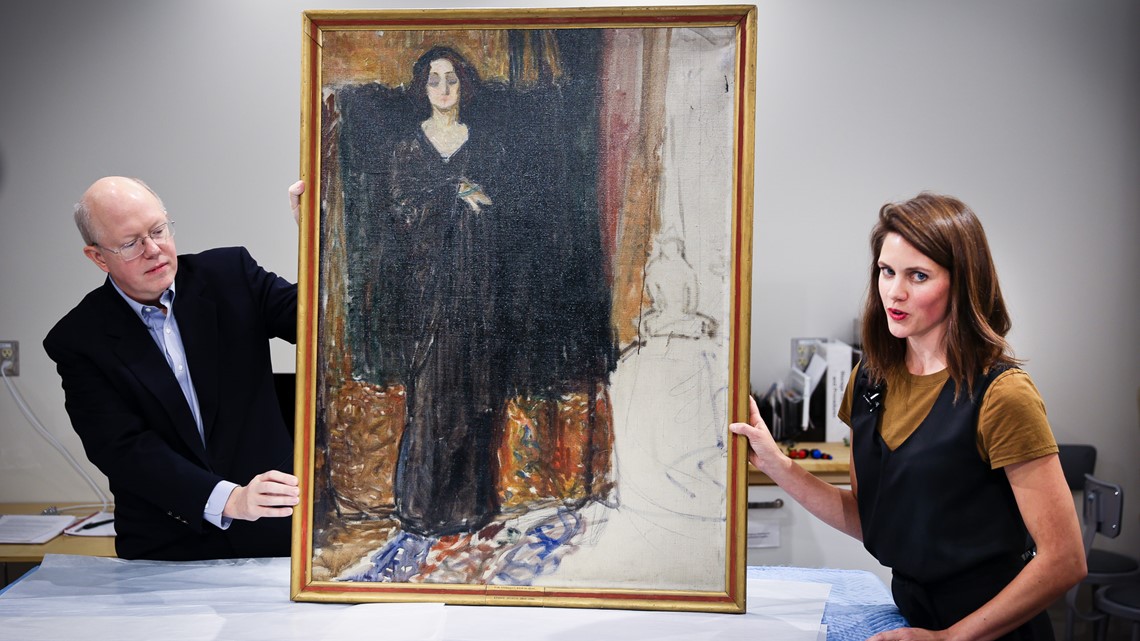
St. Olaf College, in Northfield, MN had one of those moments recently. A painting that they've had in their collection and hung on the wall in the president's dining room for about 20 years might have been painted by Edvard Munch, the painter of "The Scream".

What caught my ear in this story was the speculation that the subject of the painting was a violinist, Eva Mudocci.
Image result for st olaf munch
"Eva", the possible Munch

Sunday, October 7, 2018

Know Your Rosin - It's a Sticky Situation

By Andy Fein, Luthier at Fein Violins
and Ivana Truong

Magic Rosin with the Fein Violins logo  

It's been several years since we've blogged about Rosin.  The basics really haven't changed- Every string player needs rosin on their bow. And, in fact, the way the rosin works hasn't changed in several hundred years. But our understanding of how rosin works on a horsehair bow is becoming more in depth.


The differences in the many varieties and qualities of rosin for violin, viola, or cello seem to come from these factors- the season of the year the tapping is done, the specific species of evergreen that is tapped, how the rosin is refined from the resin, and what, if any, sprinklings of fairy dust are added.
Magic Rosin. It's clear!


Sunday, September 23, 2018

Left Handed Violins

By Andy Fein, Luthier at Fein Violins
and Ivana Truong

Occasionally, we get calls from beginners, or their parents, desperately searching for a "left handed violin".  Andy's mother was a lefty and the cello expert at our shop is a lefty, so we know the challenges that left handed people face in many aspects of life. And we know that guitars are made left handed. But guitar construction is not the same as violin family construction or playing. So here's our contention (and Megan, a left-handed cellist absolutely agrees!)- VIOLINS (and violas, and cellos) ARE LEFT HANDED as they are standardly set up. That is, the fine finger movement and hand control necessary to play a stringed instrument is centered in the left hand. Lefties have an advantage when it comes to playing violin, viola or cello- their brains are already wired for the movements to play a violin family instrument. It's righties that have some brain training to do in this regard.

The bow is held in the right hand. While there is a lot of bow finesse to learn, it's mainly macro muscle arm and hand movements. So, again, lefties are already set up to play stringed instruments the way they are already constructed.

The insides of a violin look like this-
soundpost on the E (treble) side and a bass bar on the G (bass) side

Tuesday, September 11, 2018

BIG Violas and Lionel Tertis


Lionel Tertis

image from www.english-heritage.org.uk courtesy of Margaret and Robert Lyons


By Andy Fein, Luthier, Fein Violins
and Ivana Truong

Lionel Tertis was a giant of the viola world. He brought the viola and viola playing into the 20th century as a viola soloist and commissioner of new viola solo compositions. A true giant of the viola world. But he was not a giant of a man. More like an average sized guy. But he loved the big, deep, bass-like sound that big violas produce. Throughout his career, he played a 17'' Carlo Antonio Testore viola from 1735, as well as a 17 3/4'' Gasparo da Salo viola. He met his match in Paris in 1920 when he discovered a huge Montagnana viola that was made in 1717. The Montagnana viola was 17 1/8" ( 434mm). To play a viola that large comfortably and without injury from long term use, I'd insist that the player be well over 6'! Preferably, over 6'4". Alas, Tertis was 5'6'', not anywhere near that tall. What to do, what to do?