Showing posts with label Stefan Aune. Show all posts

Tuesday, June 12, 2012

Reflections On Race, Inequality And Classical Music

By Stefan Aune and Andy Fein of Fein Violins
George Bridgetower

Classical music has had an image of being mainly white people's music. Unfortunately, this has been fostered by Euro-centric orchestras and organizations for hundreds of years. But that image is not entirely true and never has been. This blog post will feature some of the finest historical musicians of color, a few contemporary musicians of color, and a commentary on the current of racism that has damaged classical music for far too long.


"Juba" by Florence Price, featuring-
Gabriela Diaz, violin Mina Lavcheva, violin Ashleigh Gordon, viola Seth Parker Woods, cello


"Vienna Philharmonic is an orchestra of white men playing music by white men for white people"
- Werner Resel, former Vienna Philarmonic Chairman

Tuesday, May 22, 2012

MATA Festival - Premiering the World's Most Exciting Young Composers

By Stefan Aune of Fein Violins

The MATA festival emerged in 1996 through the efforts of its founders, Philip Glass, Eleonor Sandresky, and Lisa Bielawa. These world renowned composers sought to provide a venue for young up-and-coming composers to present works in a professional and highly visible setting. The festival's stated goal is to "create community among young musicians, especially those whose work defies definition and doesn't fit into existing institutions." The four day festival, which is held in New York City, regularly commissions new works at the cutting edge of composition.

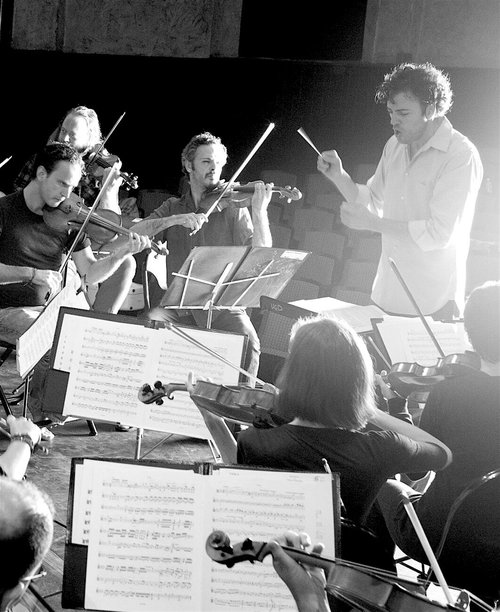
The Knights Chamber Orchestra, one of the featured performers

image from The Knights Chamber Orchestra website

Friday, May 18, 2012

El Sistema - Venezuela's Revolutionary Music Education Program

By Stefan Aune of Fein Violins

El Sistema is a publicly funded music education program that brings music into the lives of over 300,000 Venezuelan children and young adults. Active since the 1970's, El Sistema has emerged as a benchmark in the musical education of children. Wildly successful as a mechanism for reaching the most socioeconomically disadvantaged of Venezuela's youth, El Sistema has also produced world renowned musicians and conductors, the most famous of whom is Gustavo Dudamel, the charismatic music director of the LA Philharmonic.

Gustavo Dudamel and the Simon Bolivar Youth Orchestra of Venezuela
El Sistema was founded under the name "Social Action for Music" in 1975 by José Antonio Abreu, an economist and musician. Abreu's goal was to use music as a vehicle for improving the lives of Venezuelan youth and offering an alternative to drugs, violence, and poverty. He argued that "music has to be recognized as an agent of social development, in the highest sense because it transmits the highest values - solidarity, harmony, mutual compassion. And it has the ability to unite an entire community, and to express sublime feelings." Abreu's vision has managed to thrive under seven different Venezuelan governments of both the left and the right, with each government offering substantial financial support. Under current Venezuelan president Hugo Chavez the program has enjoyed an unprecedented level of financial support, with almost the entire operating budget, and additional capital projects, funded by Chavez's administration. El Sistema's focus on the youth, and its ability to operate outside the boundaries of partisan politics, has helped it to flourish and grow into a benchmark in music education. It's unabashed goal of improving the lives of Venezuela's poorest and most vulnerable children is the sort of program the rest of the world should look to and emulate.

José Antonio Abreu with children involved in El Sistema
In 2008 El Sistema was extended into Venezuela's corrections system, with music programs opening up in three jails. One of the inmates participating in the program remarked that “when I first arrived here, I thought, ‘I put a lock in my life, I screwed myself. But one begins to live music, discovers its echo, and the moment arrives when you do not so much feel the music score so much but the harmony one has with the instrument.” One of the most remarkable things about El Sistema is the acknowledgement that poverty and other social and economic disadvantages serve to limit the enjoyment of classical music to the socially and economically privileged. Instruments, classes, and orchestras cost money, and El Sistema has done an admirable job of bringing classical music into the lives of thousands that would normally be denied the privilege of picking up a violin or a cello. The extension of the program into the corrections system is another element of this commitment to make music available to the poorest and most vulnerable elements of Venezuelan society.

Children participating in El Sistema
The remarkable number of programs, ensembles and orchestras that El Sistema operates through state funding should serve as a clarion call to public education institutions in the United States that continue to slash the budgets for music and the arts. In the school district where I grew up I've watched as year after year the orchestra and band continue to flounder, with slashed budgets, laid off teachers, and tepid to non-existent administrative support. Venezuela's nation-wide commitment to music education has continually resulted in an overflowing of wonderfully talented musicians and educators, creating a self sustaining system where each generation of El Sistema contains the seeds for the next. Gustavo Dudamel, the music director of the LA Philharmonic, is easily the most internationally visible participant in El Sistema, and his successes have helped the program to receive increased attention and recognition in recent years.

Dudamel is know for his energetic conducting style
El Sistema programs have blossomed in Los Angeles, Boston, Brooklyn, Baltimore, and other U.S. cities. The program has been featured in numerous documentaries and news reports, the most visible of which is El Sistema, a 2008 documentary that won numerous film festival awards. Check out the TV-Spot below, which features El Sistema and the Simon Bolivar Youth Orchestra. In it, Dudamel and José Antonio Abreu explain the importance of music and the role El Sistema has played in educating hundreds of thousands of Venezuelan children. This is the sort of music education that the children of every single country in the world deserve, and hopefully El Sistema can serve as a blueprint for the future.  

Thursday, April 26, 2012

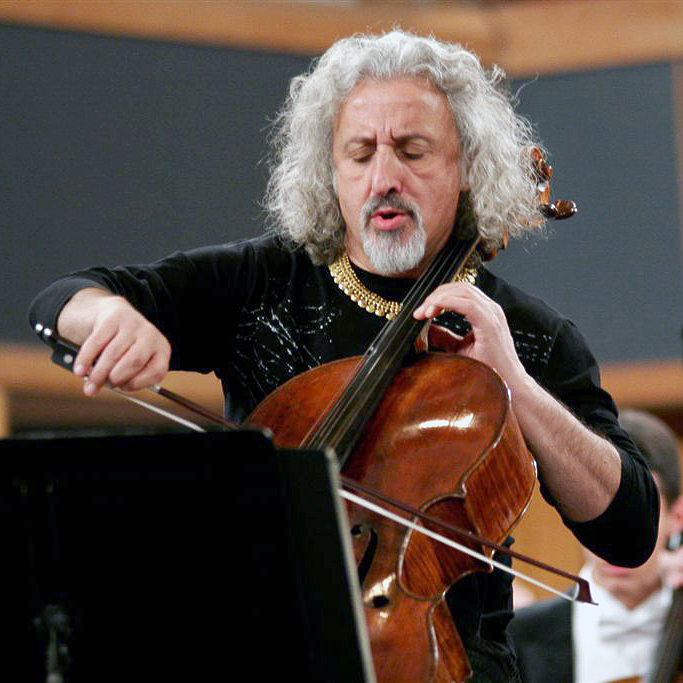
Misha Maisky - Virtuoso Cellist, Soviet Prison Inmate

By Stefan Aune of Fein Violins

Phenomenal cellist Misha Maisky was born in Riga, Latvia, in 1948. His cello studies took him to Leningrad and eventually to Moscow, where he studied at the Moscow Conservatory with Rostropovich. Maisky's sister had earlier emigrated from the Soviety Union to Israel with her family, and the Soviet authorities suspected that Misha would eventually do the same (a suspicion that was, indeed, accurate.) This, in Maisky's own words, "annoyed" the Soviet authorities, and since Maisky was determined to finish his education at the conservatory before leaving the Soviet Union, they did everything they could to disrupt his progress. Concerts were canceled, trips outside the Soviet Union were prohibited, and life was generally made difficult for the budding cellist. Maisky was undeterred, and he relates in this fascinating clip on the WQXR blog that eventually a plot was hatched to arrest and imprison him before he could finish his degree.

Misha Maisky is known for his fanciful outfits

Friday, April 20, 2012

Joshua Bell and Towel-Wearing Hotel Thief


By Stefan Aune of Fein Violins


World renowned violin soloist Joshua Bell, known for his distinctive good looks, was recently the victim of a daring hotel room robbery. While performing in the town of Zaragoza, Spain with the London Philharmonic, Bell stayed in a 5-star hotel room. During Bell's evening performance with the orchestra, an impersonator managed to convince hotel staff that he was Bell, and having lost his keys, needed help accessing his room.


Joshua Bell.JPG
The robber must have been good looking, if he managed to impersonate Joshua Bell

Once in the room, the Bell impersonator took off his clothes and donned a towel. He then contacted the front desk, complaining that he was having difficulty accessing the room safe. When a hotel representative arrived at the door, the thief answered wearing the towel, and his casual, just-out-of-the-shower appearance convinced the staff person that an ID check was unnecessary. Once the hotel representative had opened the safe, the thief cleaned it out, stealing Bell's $38,000 watch, a laptop, cash, and other personal belongings.
Joshua Bell performing
In a statement, Bell said he was "amazed at how easy it was for this to occur," and he's probably right that security should have been tighter. But we can at least be thankful that his 4$ million dollar Stradivarius, the Gibson ex-Huberman, was safety tucked under his chin during a performance, rather than resting in the hotel room. It would be a tragedy if Joshua Bell lost the instrument he so masterfully performs on. We can probably rest assured that security is a bit tighter at the hotel in Zaragoza, and hopefully the naked-towel thief won't be able to strike again.

Are you a violinist or interested in becoming one? Check out our Fine Violins
www.FineViolins.com

Thursday, March 29, 2012

Without Trees There Is No Music: The Conservation of Pernambuco Wood

By Stefan Aune of Fein Violins

Since the earliest European bow makers first sought to perfect the stringed-instrument bow, "pernambuco," or "Brazil wood," has reigned supreme as the material of choice. Sadly, the history of pernambuco is intimately tied to the processes of colonization and resource extraction that have had devastating consequences for the peoples and environments of North and South America. For a frame of reference on the history of pernambuco, check out a previous blog I wrote on the relationship between colonial resource extraction and the wood's rise to prominence in the hands of European bow-makers. Today pernambuco is endangered, and the continuing demand for wood bows is making the material increasingly difficult to acquire. Pernambuco's natural forest habitat is currently at about 10% of its pre-Columbian size, and pernambuco trees are notoriously fickle when grown in controlled, farm environments.

The harvest of pernambuco wood during the colonial period

Tuesday, March 6, 2012

Bonnaroo 2012 Stringed Musicians

By Stefan Aune and Angie Newgren of Fein Violins 

The 10th annual Bonnaroo music festival will be held this year from June 7-10 in Manchester, Tennessee. Bonnaroo is well known for its diverse lineups and arts and crafts atmosphere; in addition to the music there are usually artists selling handmade products along with movie screenings and live comedy. From Eminem to Neil Young, Bonnaroo has something for everyone, and it routinely features some of the best and; brightest of bluegrass, folk, and country-tinged rock. We wanted to feature a few of our favorite folk and bluegrass artists performing at Bonnaroo, many of whom include stringed instruments in their sound.

The Avett Brothers


Wednesday, February 29, 2012

SXSW 2012 - Stringed Instrument Highlights

By Stefan Aune of Fein Violins

Every year the South By Southwest (SXSW) festival descends on the city of Austin, Texas, bringing a deluge of film, music, and other media. The festival is particularly noted for its affiliation with hip musical acts, many of which feature stringed instrument players. Here are some of the stringed-instrument highlights of SXSW for this coming year:

Aiana String Quartet
The Aiana String Quartet, headquartered in Austin, Texas, was recently appointed the Young Professional Quartet in Residence at the University of Texas-Austin. Composed of violinists Roseminna Watson and Hanna Hurwitz, violist Mario Andreu, and cellist Jillian Bloom, each with stunning individual resumes, the quartet is noted for their outreach concerts that have taken them to music academies in California and elementary schools in Mexico. 2012 will see the quartet working with the Redlands Chamber Music Society and the Consortium of Southern California Chamber Music Presenters. If you attend SXSW be sure to check the Aiana Stringed Quartet on March 16th at the Creekside at Hilton Garden Inn, you won't be disappointed.

Friday, February 24, 2012

Apocalyptica - Heavy Metal Cello

By Stefan Aune

The worlds of classical music and heavy metal rarely meet. They are separated by venues, audiences, traditions, and cultural perceptions. Given these realities, you might be surprised to learn that a band named "Apocalyptica," a band composed of long haired, leather wearing Finns, is also a band made up entirely of classically trained cellists.

Apocalyptica

Wednesday, February 22, 2012

The National Music Museum - Home to the Works of Stradivarius, Guarnerius, Amati, and More

By Stefan Aune

If you've ever searched for information on instruments by the great violin-makers, chances are you came across the website for the National Music Museum, part of the University of South Dakota at Vermillion. This unassuming museum located far from the great artistic centers houses the preeminent collection of musical instruments in the world. Of particular interest is their amazing collection of stringed instruments by Stradivarius, Guarnerius, and three generations of Amati makers. Many of these instruments were crafted in the 1500's and 1600's. They represent the literal genesis of modern stringed instruments, and their presence in the National Music Museum's collection was the primary factor in the museum's incredible growth over the last 40 years.
National Music Museum
The National Music Museum was founded in 1973, and houses more than 15,000 instruments from all corners of the world. Highlights include some of the earliest known grand pianos, a collection of early brass instruments from Elkhart, Indiana, early Dutch and German woodwind instruments, and a collection of early Italian stringed instruments from Cremona that are found in the Witten-Rawlins collection. This collection was compiled primarily by a Yale-educated bookseller from Southport, Connecticut, Laurence C. Witten, and represents a snapshot of the violin's origins in northern Italy.  

The Andrea Amati "King" Cello
Some of the highlights of the Witten-Rawlins collection of stringed instruments include the Andrea Amati "King" cello, the oldest surviving bass-register instrument of the violin family. Built as early as 1538, the cello was updated and painted in 1560 as part of its inclusion in a collection of instruments sold to the French court of King Charles IX. Only a few of the instruments from the collection survived the French Revolution, and the "King" cello is one of them. Check out more images of this fabulously painted instrument here.

Center bass-rib of the "King" Cello
Another highlight of the Witten-Rawlins collection is a tenor viola made by Andrea Guarneri in 1664. This viola has the distinction of being one of three Cremonese instruments that have survived, unaltered, to the present day. The National Music Museum also owns the other two unaltered Cremonese instruments, a Girolamo Amati violino picccolo, and the Medici tenor viola by Stradivarius, made in 1690. All three instruments retain their original dimensions, as well as their original tuning pegs, scroll, nut, fingerboard, saddle, button, tailpiece, and bass-bar. These instruments provide incredible insight into the work that the classic Cremonese makers were doing hundreds of years ago. It is amazing that they have survived in an unaltered state to the present day, so take a moment to check out each instrument's page. 

Tenor viola by Andrea Guarneri, 1664
Girolamo Amati violino piccolo, 1613
The National Music Museum also has an incredible collection of instrument labels and luthier tools, including patterns, clamps, calipers, dividers, blocks, groove cutters and soundposts setters. Listings, descriptions, and pictures of the items in the Witten-Rawlins collection can be found here, and I would encourage you to browse through and see some amazing pictures of priceless stringed instruments. 

Friday, February 17, 2012

Was Beethoven Really Deaf?

By Stefan Aune

Beethoven's struggle with hearing loss is one of the more widely known legends concerning the famous composer. The subject is approached almost reverently, and is treated as this mystical element of his history, because it means that Beethoven composed some of the world's most beautiful music without the use of his hearing. In fact, Beethoven suffered from tinnitus, a symptom (not a disease) that results in mild to severe ringing in the ears. Tinnitus can result from ear infections, damage to the ear canal, nasal allergies, wax build up, or complications from other diseases. Beethoven's tinnitus, and subsequent deafness, has been attributed to complications resulting from typhus or an auto-immune disorder. It was also found in his autopsy that he had a "distended inner ear" which developed lesions during his lifetime, contributing to his deafness.

Ludwig van Beethoven

Friday, February 10, 2012

Kronos Quartet and the Music of Vladimir Martynov

By Stefan Aune

The Kronos Quartet is one of the more visible and respected modern string quartets, active since 1973 and tirelessly commissioning and performing music across genre boundaries. From African music to jazz, salsa to Jimi Hendrix, the quartet's willingness to move outside the boundaries of classical music has endeared them to a much wider audience than the average string quartet. In addition to their willingness to perform all styles of music, the Kronos Quartet has commissioned more than 750 contemporary works from some of my personal favorites like Phillip Glass and Terry Riley. Their latest release, "Music of Vladimir Martynov," features works by one of the most interesting contemporary composers you may have never heard of, Vladimir Martynov.

The Kronos Quartet
Vladimir Martynov was born into the former Soviet Union in 1946, the son of a respected musicologist. Martynov studied at the Moscow Conservatory, employing the 12-tone music technique and progressing into avante-garde and electronic composition. Martynov also developed an interest in ethnomusicology, studying the musical traditions of different Russian ethnic groups as well as ancient Russian religious chanting. He was involved in the 1970's Russian brand of minimalist composition that favored static, religiously inspired timeless composition over the more dynamic American brand of minimalism employed by the likes of Steve Reich.

Thursday, February 9, 2012

The Minnesota Orchestra

By Stefan Aune

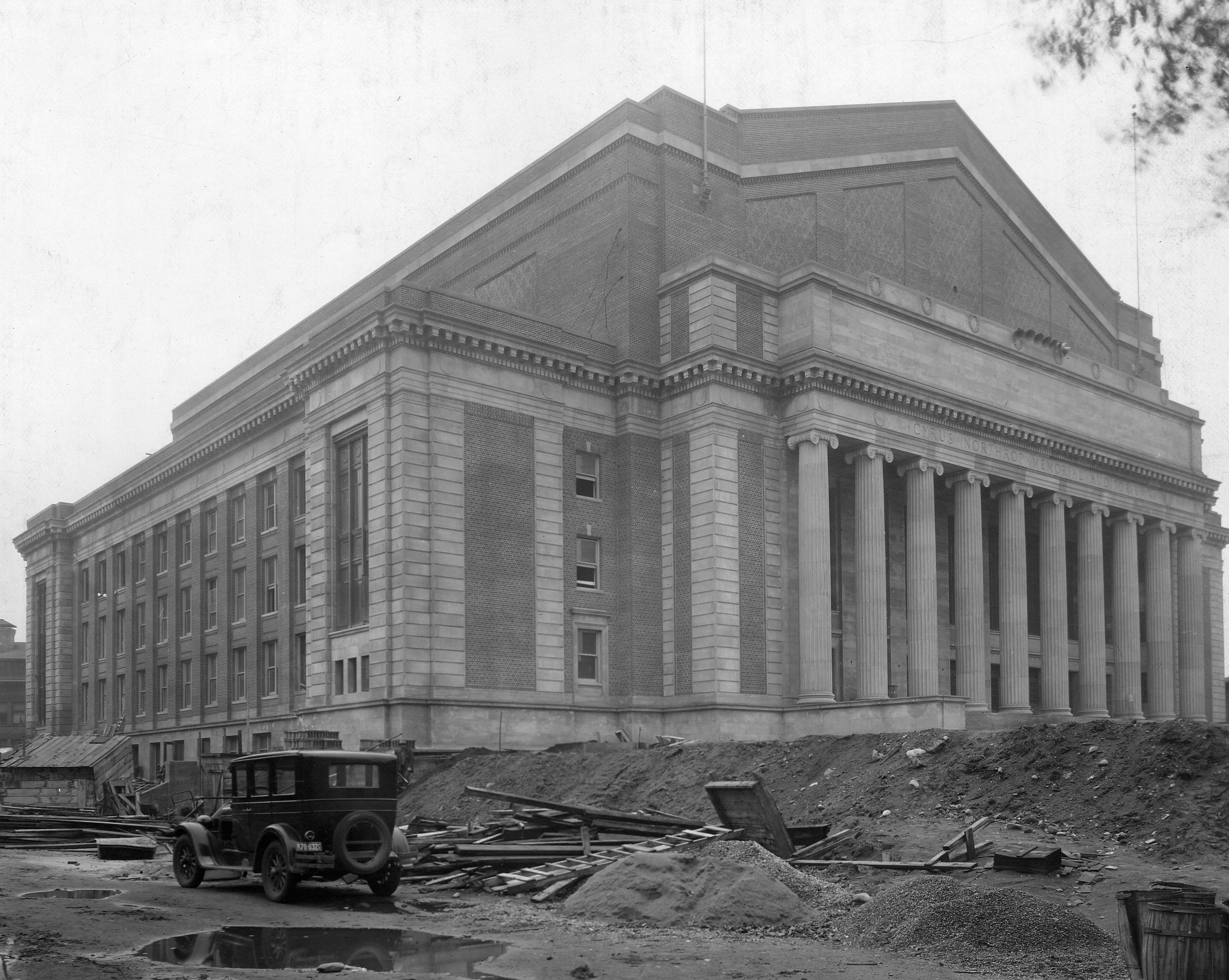
The Minnesota Orchestra was founded as the Minneapolis Symphony Orchestra in 1903, the same year of baseball's first "World Series." The orchestra made it's first of many trips to Carnegie Hall in 1907, and was one of the first orchestras to be heard nationally over the radio, in 1923. The orchestra thrived in the 1950's and 60's under music directors Antal Dorati and Stanislaw Skrowaczewski, releasing classic LP's that have since been re-released as compact discs.

Northrop Auditorium, the Minnesota Orchestra's home, until 1974

Monday, February 6, 2012

Bernard Greenhouse and the auctioning of the Countess of Stainlein / Paganini Stradivarius Cello

By Stefan Aune

The famous "Countess of Stainlein, ex-Paganini of 1707" Stradivarius cello that was owned by the late Bernard Greenhouse has been sold at auction for more than $6 million to an anonymous patron of the arts in Montreal. This auction most likely sets a new record for the sale of a cello, the previous record being about $5 million. The cello, which was made by Stradivarius during his prolific "golden period," has been played on by Bernard Greenhouse since the 1950's. Greenhouse passed away in May of 2011, and his family arranged to sell his cello via sealed auction through Reuning & Sons Violins in Boston. The "anonymous patron" plans to loan the cello to 18 year old Stéphane Tétreault, a student studying cello and conducting at the University of Montreal.

The Countess of Stainlein, ex-Paganini Stradivarius (allthingsstrings.com)


The Countess of Stainlein, Paganini Stradivarius cello, Cremona, 1707

Friday, January 27, 2012

Classical Music Riots from Richard Wagner to Steve Reich

By Stefan Aune

Awhile back I wrote a blog about the riot that broke out at the premiere of Stravinsky's The Rite of Spring. The audience became so violent that the police shut down the performance, resulting in plenty of publicity for Stravinksy's tonally and artistically controversial ballet. You may be surprised to learn that The Rite of Spring premiere isn't the only instance of classical music rioting. In fact, there have been several instances throughout history where the emotions of the audience were moved in the direction of yelling, fighting, or disruption. Here are a few of the most famous incidents:

Thursday, January 19, 2012

The Beheading of Léopold Renaudin - French Violin Maker & Revolutionary

By Stefan Aune

Léopold Renaudin was a french violin maker who was born, like may of the greatest French makers, in the city of Mirecourt in the Lorraine region. He left home for Paris at the age of 16 and apprenticed with an unknown violin maker, eventually working from home and cultivating a profitable business. He was a skilled maker, who made a cello for Boccherini and worked for the Academie Royale de Musique. Renaudin is particularly known for the high quality of his basses.
A violin by Leopold Renaudin

Friday, January 6, 2012

Goffriller, Montagnana, and the Golden Age of Venetian Violin Makers

By Stefan Aune

In recent blogs we have focused on the city of Cremona, Italy, the renowned violin-making hub that gave us the names Amati, Stradivarius, and Guarnerius. While Cremona is certainly the nexus from which much of violin making history resonates, attention must also be paid to the city of Venice, renowned for its rich musical culture as well as its violin makers.

A Painting of the Venetian Canals by Joseph Turner
The political and economic context of Venice played a significant role in the development of its violin making culture. Venice was a "cultural crossroads" for commerce and art, with Saracens, Arabs, and Greeks rubbing shoulders with Europeans. The city was always staunchly independent from its European neighbors, hesitant to enter into long term alliances and agreements. The focus of Venetian politics was on propagating its trading culture, which flourished and made the city one of the mercantile centers of the world. Venice also maintained its independence from the Roman Catholic Church to such a degree that one of the popes excommunicated the entire city.  This was later reversed.

This independence resulted in two fundamental differences between the violin making cultures of Cremona and Venice. Whereas Cremona's fame derived from its provision of instruments to the courts of European royalty, Venetian makers made instruments for all classes of people, rich and poor alike. Additionally, the lack of church connections meant that Venice didn't benefit from the influences that spurred the development of the Cremonese violin designs. Consequently, the famous Venetian makers appear slightly after the rise of the Cremonese makers.

Wednesday, January 4, 2012

Paypal and the Mystery of the Smashed Violin

By Stefan Aune of Fein Violins

The internet payment service Paypal faces heavy criticism after a recent story in which a seller claims Paypal "forced" a buyer who disputed the authenticity of a violin to destroy it in order to get their money back. According to the Guardian a seller named "Erica" sold an old French violin to a buyer in Canada for $2500, and had the violin authenticated by a "top luthier" prior to sale. Obviously we don't' know who the luthier was, and it goes without saying that violin makers often disagree on the authenticity of labels and instruments, but irregardless, the buyer disputed the authenticity of the instrument upon receiving it.

Rather than simply get in touch with the seller and arrange to return the instrument, the buyer contacted Paypal directly to try and get their money back. Paypal responded that in the case of "counterfeit" merchandise (a category that a disputed violin absolutely does not belong in) the buyer must provide evidence of having destroyed the merchandise in order to get their money back. The buyer proceeded to smash the violin and send pictures of the wreckage to the seller. Paypal gave the buyer their money back, and the seller was out both the money and the violin.

The Smashed Violin
A close examination of Paypal's regulations confirms that they may require a buyer to destroy an item claimed to be "counterfeit." In the case of something as precious as an old violin, the sheer senselessness of this policy boggles the mind. There is absolutely no reason that this violin should have been destroyed, and now this instrument is lost forever. This was not a "counterfeit" violin, but rather a violin with a disputed interior label. This sort of situation is hardly exceptional. Violin makers often disagree over instrument authenticity. Appraising a violin is a complicated and delicate process that involves examining pieces of wood that are often hundreds of years old, and sorting out original work from repair work, and false labels from authentic labels.

It is unconscionable that Paypal would have a violin destroyed in order to resolve an internet business transaction. They have neither the expertise nor the ability to reliably resolve a dispute over a violin, and ordering the violin destroyed benefits no one. If the seller was unhappy with the violin they should have simply returned it. Hopefully the exposure garnered by this incident will result in a change of policy for Paypal, and ensure that this situation is never repeated. Old violins are a precious commodity, and the last thing we want to see is someone taking a hammer to one in order to get a refund.

Here is The Guardian's article in its entirety.

Thursday, December 29, 2011

Nicolo Amati, Violin Maker Extraordinaire & Teacher of the Greats

By Andy Fein,  Luthier at Fein Violins
and  Stefan Aune, with image research help by Elijah Fein

In The Amati Family of Violin Makers we introduced Andrea Amati and his sons Antonio and Hieronymus. These early makers established the Amati family and the city of Cremona, Italy as preeminate violin making institutions, and Hieronymus' fifth son, Nicolò, would build on this reputation and become the greatest maker of the Amati family, producing amazing instruments and training several of the most famous makers in history.

A violin by Nicolo Amati, Cremona,Itay, 1628

image from the National Music Museum


Friday, December 23, 2011

The Amati Family of Violin Makers. A Cremonese Dynasty

By Andy Fein, luthier at Fein Violins

1560 was a long time ago, even by violin standards where an instrument is "modern" until it's about one hundred years old. In an earlier post on the Oldest Known Violin Makers, we introduced Andrea Amati, the first recorded violin maker in Cremona, Italy. Andrea leased his first shop in Cremona in 1538, and his skills and those of his descendants produced a dynasty of violin makers of the Amati name and trained the Guarneris, Bergonzis, Rugeris and a fairly skilled violin maker named Antonius Stradivarius.

circa 1560 Andrea Amati Viola

image from the National Music Museum

The life of Andrea Amati goes so far back in history that it is difficult to pin down the exact timeline of his career. It is commonly held that Andrea learned under Gaspare da Salo in Brescia before setting up shop in Cremona, with the bulk of his work occurring in the second half of the16th century. However, in the Daniel Draley sponsored translation of Cremonese historian Carlo Bonnetti's La Genealogia degli Amati Liutai e il Primato della Scuola Liutistica Cremonese, there emerges a different story of Andrea's life. Carlo Bonnetti made use of documents produced by the Cremonese government, such as leases, marriage agreements, and contracts, to show that Andrea was established in Cremona far earlier in the 16th century, and that he was in fact much older than Gasparo da Salo. In a document from 1556 listing those Cremonese residents of the appropriate age to bear arms (15 - 50), we find Andrea's elder son, Antonio, but not Andrea himself. This would mean that Andrea was at least 50 years old in 1556, and this fact, combined with the fact that Gaspare de Salo was born in 1542, means that Andrea was about 40 years older than Gasparo and highly unlikely to have learned under him.