Showing posts with label cellos. Show all posts

Sunday, July 22, 2018

Stradivarius vs. Guarnerius Cellos

By Andy Fein, Luthier, Fein Violins
and Ivana Truong


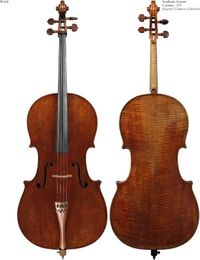
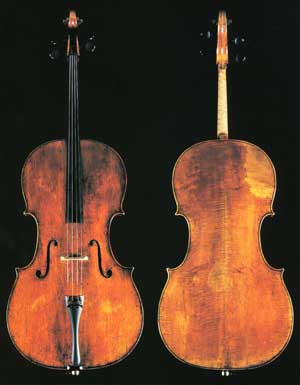
Recently, cellist Pablo Ferrandez had the incredible opportunity to compare two great cellos- the 'Aylesford' Stradivarius cello of 1696 and a Joseph filius Andrea Guarnerius cello made in 1694. As you can tell, this made Pablo Ferrandez very happy. Very, very happy!


Sunday, November 6, 2016

Cellos are Big. They Used to be Bigger.

By Andy Fein, Luthier, Fein Violins, Ltd.

If you've ever seen someone struggling down the street or up the stairs with a cello, your first thought might be "Wow! Those are big instruments!" Well, in the very long history of cellos, many of them used to be even bigger.
The 'Lord Aylesford' Stradivarius cello. A BIG cello
The standard body length of a modern cellos is about 750mm (29 1/2"). Before 1700, some monster cellos, even those made by great makers, were 760mm to 800mm (30" to 31.5"). These big cello were also proportionately wider in width. Think about that the next time you need to reach around your cello's upper bouts to play in upper positions!

Wednesday, May 30, 2012

What are Violins, Violas, & Cellos Made Of?

By Matt Lammers and Andy Fein

A friend of ours on Facebook recently sent us a message and asked, "what wood works best for different parts of the cello, and why?" So we sat down at the computer, as is our routine for questions of this sort, to pull up a link to our blog entry about instrument materials. Wouldn't you know it, we didn't have one!

This is a question that often confuses instrument buyers and string players alike. The falsely satisfactory conclusion, "they're made of wood, except for the strings; I think they're steel," is too often drawn in response to an issue that is far more in depth than that.

In one sense, though, the answer is quite simple and almost always consistent for modern violins, violas, and cellos- Maple is used for the back, sides and neck; Spruce is used for the top and the fingerboard is made from Ebony. But Spruce and Maple are broad categories of trees that encompass several species. The species of wood is the primary variable concerning sound, visual aesthetic, and durability, however the wood's age, grain structure, and cut style, also play pivotal roles in these attributes.

Good wood choice makes a fine violin pleasing to the eye, but even more so to the ear

Sunday, May 13, 2012

The Strad Disaster: Spanish Cello Damaged During Photo Shoot

By Matt Lammers and Andy Fein, Luthier at Fein Violins

As of a little over three weeks ago the Spanish Royal Palace is faced with a problem that has classical musicians everywhere cringing: the 1694 Stradivarius cello known as the "Spanish" was severely damaged during a routine photo shoot. While the cello was being positioned alongside its counterparts, the two violins and viola of the "Spanish Quartet," it was knocked off its side from a table onto the floor.

Vera Martinez, Abel Tomas (violins), Jonathan Brown (viola), and Arnau Tomas (cello) of the Casals Quartet, who currently perform using Stradivarius' Spanish Quartet
image from the Casals Quartet website

Thursday, April 26, 2012

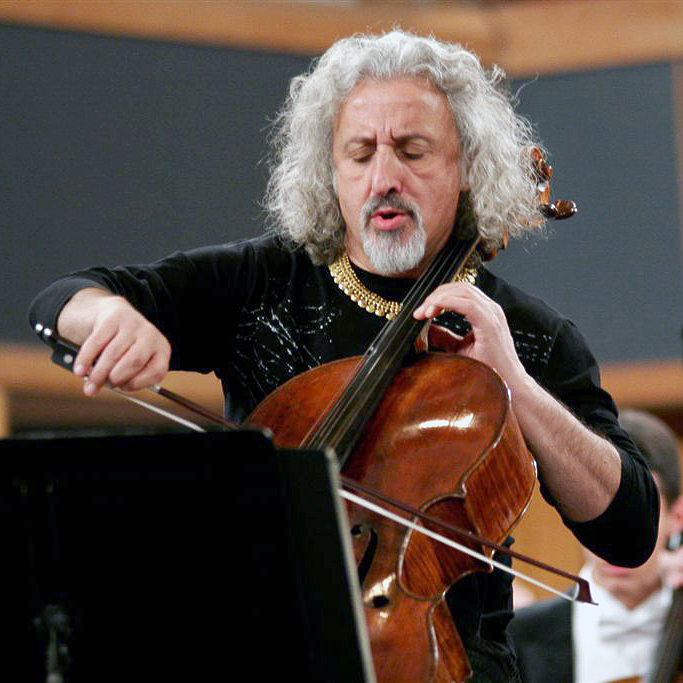
Misha Maisky - Virtuoso Cellist, Soviet Prison Inmate

By Stefan Aune of Fein Violins

Phenomenal cellist Misha Maisky was born in Riga, Latvia, in 1948. His cello studies took him to Leningrad and eventually to Moscow, where he studied at the Moscow Conservatory with Rostropovich. Maisky's sister had earlier emigrated from the Soviety Union to Israel with her family, and the Soviet authorities suspected that Misha would eventually do the same (a suspicion that was, indeed, accurate.) This, in Maisky's own words, "annoyed" the Soviet authorities, and since Maisky was determined to finish his education at the conservatory before leaving the Soviet Union, they did everything they could to disrupt his progress. Concerts were canceled, trips outside the Soviet Union were prohibited, and life was generally made difficult for the budding cellist. Maisky was undeterred, and he relates in this fascinating clip on the WQXR blog that eventually a plot was hatched to arrest and imprison him before he could finish his degree.

Misha Maisky is known for his fanciful outfits

Sunday, March 18, 2012

Antonio Stradivari's Cellos

By Andy Fein, Luthier at Fein Violins

If you have read some of my past blog posts, you probably realize I love Stradivarius violins. But it is Stradivarius' cellos that I am enamored with. I really love Stradivarius cellos. I really, really, love Stradivarius cellos.

The first Stradivarius cello I encountered is the one that has stuck in my memory for decades. The 'Braga' cello, made by Stradivarius in Cremona about 1731. The 'Braga' is currently played by the wonderful Korean cellist Myung-Wha Chung. It is one of the few cellos that was made on the smaller scale form that Stradivarius developed, the 'Forma B Piccola'. While I was in my apprenticeship in Chicago, Kenneth Warren, Sr. brought the 'Braga' cello to us to examine. I took the opportunity to spend an immense amount of time with it. OK, I fell in love with it!
Steven Isserlis and his Stradivarius cello

Friday, February 24, 2012

Apocalyptica - Heavy Metal Cello

By Stefan Aune

The worlds of classical music and heavy metal rarely meet. They are separated by venues, audiences, traditions, and cultural perceptions. Given these realities, you might be surprised to learn that a band named "Apocalyptica," a band composed of long haired, leather wearing Finns, is also a band made up entirely of classically trained cellists.

Apocalyptica

Sunday, February 12, 2012

Cello Ensembles. There's Always Room for Cello.

By Andy Fein and Angie Newgren

Do you love the sound of a cello? That deep, booming voice thrills and captivates many listeners, including everyone that works at Fein Violins! Well, if one cello is a thrill, how about four cellos? Or twelve cellos? Or an ensemble of nothing but cellos? One of the best, and most fun, musical trends of recent years has been cellos, Cellos, and more CELLOS!
Take a peak at these ensembles. They all who share one thing in common: Nothin' But Cellos! Each of these groups, and many others, have brought us a variety of ways to hear what these instruments are capable of.


Portland Cello Project
Connection, innovation, and collaboration. These are the three missions that the Portland Cello Project wishes to bring to its listeners. Giving you a new sound, this group of cellists travels across America touring from rock venues to country halls. They have over 800 songs, guaranteeing that no show will ever be the same.

Portland Cello Project

Arching. Great Curves!

By Andy Fein, Violin Maker and Owner, Fein Violins, Ltd.

Take a sidelong look at your violin, viola or cello. You'll notice that the top and the back are not flat. In fact, they have pretty complicated curves rounding up side to side and from the neck to under the tailpiece. Those curves are called the arching of your instrument.
A view of the arching of an Andreas Guarnerius viola

Monday, February 6, 2012

Bernard Greenhouse and the auctioning of the Countess of Stainlein / Paganini Stradivarius Cello

By Stefan Aune

The famous "Countess of Stainlein, ex-Paganini of 1707" Stradivarius cello that was owned by the late Bernard Greenhouse has been sold at auction for more than $6 million to an anonymous patron of the arts in Montreal. This auction most likely sets a new record for the sale of a cello, the previous record being about $5 million. The cello, which was made by Stradivarius during his prolific "golden period," has been played on by Bernard Greenhouse since the 1950's. Greenhouse passed away in May of 2011, and his family arranged to sell his cello via sealed auction through Reuning & Sons Violins in Boston. The "anonymous patron" plans to loan the cello to 18 year old Stéphane Tétreault, a student studying cello and conducting at the University of Montreal.

The Countess of Stainlein, ex-Paganini Stradivarius (allthingsstrings.com)


The Countess of Stainlein, Paganini Stradivarius cello, Cremona, 1707

Thursday, January 19, 2012

The Beheading of Léopold Renaudin - French Violin Maker & Revolutionary

By Stefan Aune

Léopold Renaudin was a french violin maker who was born, like may of the greatest French makers, in the city of Mirecourt in the Lorraine region. He left home for Paris at the age of 16 and apprenticed with an unknown violin maker, eventually working from home and cultivating a profitable business. He was a skilled maker, who made a cello for Boccherini and worked for the Academie Royale de Musique. Renaudin is particularly known for the high quality of his basses.
A violin by Leopold Renaudin

Saturday, December 17, 2011

Wittner Finetune Pegs


By Andy Fein, luthier at Fein Violins

Learning to tune a stringed instrument can be one of the most frustrating and expensive parts of learning to play. Most student instruments are usually set up with some type of four fine tuner configuration. And they should be! But fine tuners on the tailpiece only solves half of the tuning problem.
Wittner Finetune Pegs

Thursday, December 1, 2011

The History of the Violin:
Early Stringed Instruments and the Development of the Bow

By Stefan Aune of Fein Violins

Tracing the origins of the violin is difficult - evidence of the earliest stringed instruments is primarily found in sculptures and works of art, as instruments made of wood are unlikely to survive for thousands of years. Cultures such as the ancient Greeks and Egyptians made use of stringed instruments, but they did not make use of bows, and the development of the bow is what sets the violin family and its ancestors apart from harps, guitars and other early stringed instruments. A common theory, which is discussed and refuted by Ed. Heron-Allen in his book Violin-Making, as it was, and is, attributes the earliest violins to the Israelites, citing passages in the Bible such as Psalm 81:2 that says "The pleasant harpe, with the viol," or a passage from the book of Samuel that says "And David and all the house of Israel played before the Lord with all manner of instrumentys of fyrre woode, wyth harpes, psalteries, timberelles, fyddelles, and symbals." These passages that seem to reference the viol or fiddle are in fact mistranslations of the Hebrew word for harp, and no word that would signify "bowed instrument" appears in the earliest versions of the Bible.

An ancient Greek vase, which depicts a phorminx, and early Grecian stringed instrument

Wednesday, October 19, 2011

Pegs For Violins, Violas & Cellos- Ebony, Rosewood or Boxwood?

Written by Andy Fein, luthier at Fein Violins

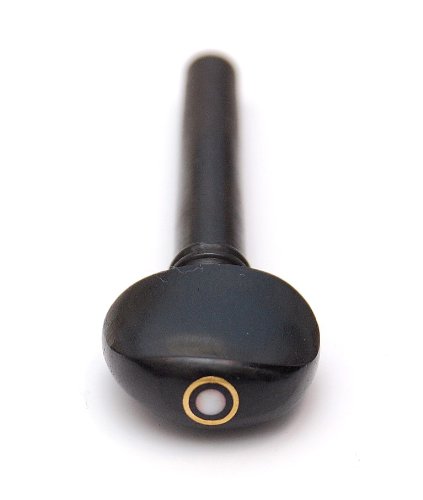
Violins4you Violin Peg Ebony One 1 With Pearl Dot Inlay / Parisian Eye
Ebony Violin Pegs with Parisian Eyes

Ebony, Rosewood or Boxwood. Those are usually the three choices of wood for pegs on stringed instruments. What's the difference? Probably not much beyond wood color and looks. But in stringed instruments, everything makes a difference. Considering that your pegs are the functioning unit on your instrument that enables you to tune, the pegs are very, very important.

Sunday, October 9, 2011

New or Old. Which is Better for Violins, Violas & Cellos?

Written by Andy Fein, Luthier at Fein Violins

I'm often asked: "Which is better? A new instrument or an old one?"

There is a mystique about old instruments. After all, Stradivarius & Guanerius were making instruments in the 1700s. Aren't all old instruments better than new ones? Well, yes and no. It depends on what you are interested in.

Stradivarius and Guarnerius made new instruments. Seems like a simple and intuitively obvious statement, but not everyone realizes that. Yes, Stradivarius, Amati, the Guarneris, Guadagnini, Montagnana, Vuillaume, Lupot, and the Chanot/Chardons were all real people. Real people making brand new instruments. Did they sound good when they were made? Probably, but we have no real way of knowing that. But judging from the people that played them and loved them, they were very nice sounding new instruments.

There were also a bunch of other makers from the 1500s on through the 1900s ( and even today)  that made passable, mediocre and downright lousy instruments. Are those old instruments better than a good sounding new instrument? Probably not.

Here are some considerations.

Sunday, September 25, 2011

Five Things You'll Need to Start the Season Off Right & Sound Your Best

By staff at Fein Violins

It's the end of September and the weather and temperature have settled into the next season: Fall. Auditions everywhere are being held, and orchestras and ensembles are beginning to start again as well. There are a few things you can do as a player to create better sound, and keep your instrument in its best mode. Now is the perfect time to do it!
  1. Straighten Your Bridge.
    Check to see if your bridge is still on correctly.
    I was preparing for an audition the other day, and while practicing I noticed that sometimes my strings gave out a false sound. With an upcoming audition, I wanted all the sound I played to be fluent and pure. But my bridge was leaning forward, out of position and preventing me from creating that sound. The vibration of the bridge is what translates the vibrations of the strings to the instrument. After I straightened my bridge, my violin played much more like its old self. I didn't have any more distractions for my audition, which helped me focus on playing. If you're not comfortable adjusting your bridge, bring it to your violin shop, where your luthier should be more than happy to help. You'll need your luthier for the next few steps as well.


Tuesday, September 20, 2011

Alisa Weilerstein - Cello Genius

By Stefan Aune of Fein Violins

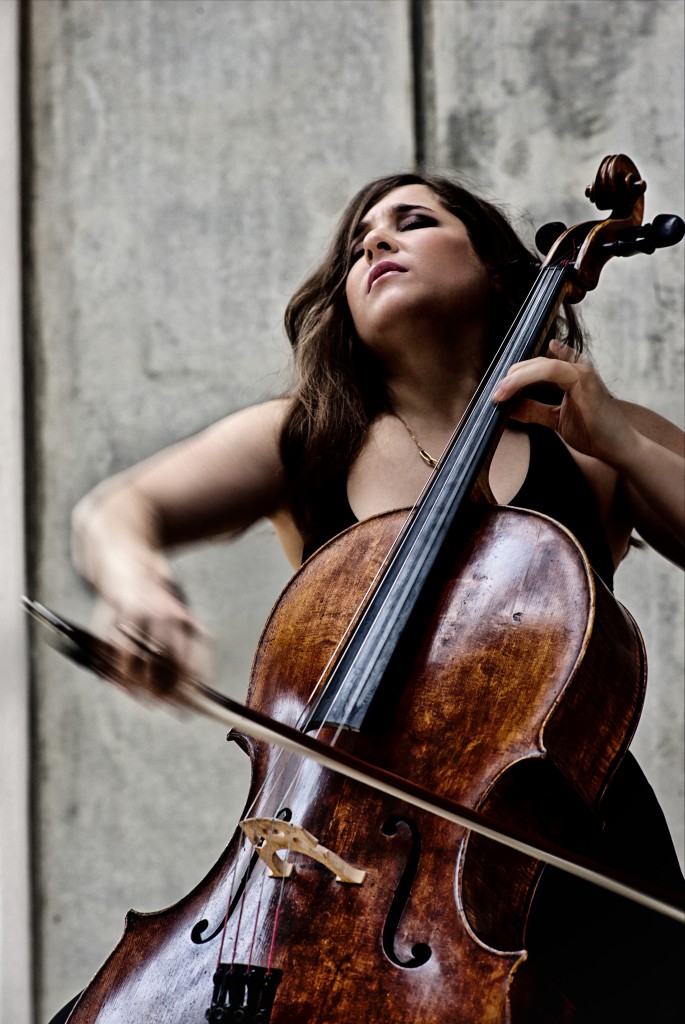
Alisa Weilerstein is an internationally renowned cellist and a 2011 MacArthur Fellowship award winner. This award, given each year to between 20 and 40 U.S. residents, is known colloquially as the "genius award," and is presented to individuals of any age or field that "show exceptional merit and promise for continued and enhanced creative work." Alisa certainly fits these qualifications, both for her exceptional skills as a cellist and her drive to collaborate and work on new music with contemporary composers.

© Decca / Harald Hoffmann
Alisa Weilerstein

image from http://alisaweilerstein.com/
© Decca / Harald Hoffmann

© Decca / Harald Hoffmann
Born to musical parents (her father is the 1st violinist of the Cleveland quartet and her mother is a well known pianist), Alisa picked up the cello at age 4, and made her debut at the age of 13 with the Cleveland Orchestra. In addition to her orchestral work she plays in the Weilerstein Trio with her parents, which resides at the New England Conservatory. Eschewing the typical route followed by most musical prodigies, Alisa went to Columbia University and received a bachelor's degree in Russian history, at the same time keeping up a hectic performance schedule.

Sunday, August 21, 2011

The Cheapest Violins - Maybe Not Such A Good Deal

Written by Andy Fein, luthier at Fein Violins
 and Angie Newgren

As time passes and technology improves, the number of people worldwide who shop online continues to rise. It's easier for customers to shop and see what's available, and our shop's online store has given us customers and friends from all over the world! But how do you know when you cross a deal for violins, violas or cellos that is too good to be true? This blog explains why the cheapest violin (viola or cello) you find online (or in a store) is the wrong violin to purchase. Visit our other blog  Finding Your Violin Online to read about purchasing the right one for you!

If you're just starting out, it's hard to fathom why you should spend any more than the cheapest price you can find. Unfortunately, stringed instruments are pretty hard to learn and if everything (& I mean EVERYTHING!)  is not set up pretty close to perfect it makes it almost impossible to learn to play. In fact, the set up on a beginner instrument is just as important as on a fine soloist instrument.

Violin Values range from under 100 dollars to over 100,000 dollars.

Thursday, August 4, 2011

7/8 Size Violins and Cellos. The Right Size?

Written by Andy Fein, luthier at Fein Violins

The 7/8 size for violins and cellos is a somewhat rare and odd creature. Not quite a full size and definitely larger than a 3/4 size. If you feel, for any reason, that a full size instrument is too big for you, then you might consider a 7/8 size.

Generally, if you are at about 5 feet tall, you are right in the range of the person that might need a 7/8 size. There are also other factors: your age, the length of your arm, the length of you fingers, arthritis, and muscle or tendon injuries.

This is the right size!

Saturday, July 30, 2011

Fix it Yourself or Bring to Your Luthier?

 Written by: Amy Tobin at Fein Violins

Violins, violas, and cellos, because they are made from wood, can change. In fact, they are designed to do so. That way, when the weather changes, and the wood shrinks or swells, it protects the main body of the instrument from cracking. So, when things happen to your instrument and it ceases to operate smoothly, which things can you do yourself, and which things should you bring your violin in to your luthier to take care of?

One of the most common things that can happen is a tuning peg that either slips or sticks.