Showing posts with label violins. Show all posts

Wednesday, May 30, 2012

What are Violins, Violas, & Cellos Made Of?

By Matt Lammers and Andy Fein

A friend of ours on Facebook recently sent us a message and asked, "what wood works best for different parts of the cello, and why?" So we sat down at the computer, as is our routine for questions of this sort, to pull up a link to our blog entry about instrument materials. Wouldn't you know it, we didn't have one!

This is a question that often confuses instrument buyers and string players alike. The falsely satisfactory conclusion, "they're made of wood, except for the strings; I think they're steel," is too often drawn in response to an issue that is far more in depth than that.

In one sense, though, the answer is quite simple and almost always consistent for modern violins, violas, and cellos- Maple is used for the back, sides and neck; Spruce is used for the top and the fingerboard is made from Ebony. But Spruce and Maple are broad categories of trees that encompass several species. The species of wood is the primary variable concerning sound, visual aesthetic, and durability, however the wood's age, grain structure, and cut style, also play pivotal roles in these attributes.

Good wood choice makes a fine violin pleasing to the eye, but even more so to the ear

Sunday, February 12, 2012

Arching. Great Curves!

By Andy Fein, Violin Maker and Owner, Fein Violins, Ltd.

Take a sidelong look at your violin, viola or cello. You'll notice that the top and the back are not flat. In fact, they have pretty complicated curves rounding up side to side and from the neck to under the tailpiece. Those curves are called the arching of your instrument.
A view of the arching of an Andreas Guarnerius viola

Sunday, February 5, 2012

Cremona after Stradivarius

By Andy Fein, Owner and Violin Maker, Fein Violins, Ltd.

The greatest era of violin making in Cremona from the late 1600s to the mid 1700s saw the life and work of Antonius Stradivarius, two of Stradivarius' sons- Omobono and Francesco, Guarnerius del Gesu, Giuseppe Guarnerius filius Andrea, and Carlo Bergonzi. In a strange and unfortunate twist of fate, all of these makers died within a ten year span. Antonius Stradivarius died in 1737, his sons in 1742 and 1743, Giuseppe filius Andreas in 1739, del Gesu in 1744, and Carlo Bergonzi in 1747.
Scroll of a violin by Lorenzo Storioni, Cremona circa  1793

Violin makers carried on in Cremona, but they did not reach the same heights of fame as their predecessors. Who were these makers? While these makers did not achieve the glory of the Golden Period of violin making in Cremona, there are certainly some very fine luthiers in their ranks.

A viola by Nicola Bergonzi, made in Cremona circa 1781

Sunday, January 22, 2012

Mirecourt, France. Headwaters of French Violin Making

Written by Andy Fein, Violin Maker and Owner, Fein Violins, Ltd.

Many of France's best violin and bow makers from the 1700s to the present day share a very similar biography - Jacques (or Jean-Baptiste, Jeanne, Rene', Renee', Andre', Emile, etc.) were born in Mirecourt where they learned the trade from their father (or uncle, grandfather, brother,mother, sister, etc.). Starting at about age twelve, they worked at the bench with their family making instruments and bows... A shop owner in Paris (Vuillaume, Chanot, Caressa, Francais, etc.) heard of their talent and invited them to come to Paris. In Paris they received great acclaim for their work... Or didn't, so they slunk back to Mirecourt and toiled away in one of the production workshops there.

An H. Derazey violin, Mirecourt circa 1860

Thursday, January 19, 2012

The Beheading of Léopold Renaudin - French Violin Maker & Revolutionary

By Stefan Aune

Léopold Renaudin was a french violin maker who was born, like may of the greatest French makers, in the city of Mirecourt in the Lorraine region. He left home for Paris at the age of 16 and apprenticed with an unknown violin maker, eventually working from home and cultivating a profitable business. He was a skilled maker, who made a cello for Boccherini and worked for the Academie Royale de Musique. Renaudin is particularly known for the high quality of his basses.
A violin by Leopold Renaudin

Wednesday, January 11, 2012

Nadja Salerno-Sonnenberg

By Andy Fein and Angie Newgren

Living the life of a performing violinist is (of course) a topic that captures all of us who play and listen to classical music. These virtuosos have a long list of accomplishments such as creating flawless repertoires, traveling across the world, winning competitions, judging competitions, starting foundations and much more. They are given (well deserved) instruments from various philanthopists and companies to perform their music, giving us the opportunity to hear the best from the best.
From our time comes a violinist who has mastered her playing, and also has one of the most interesting stories I've come across.

Nadja Salerno-Sonnenberg & her 1721 Petrus Guarnerius of Venice

Sunday, January 8, 2012

Erica Morini and the Davidoff Stradivarius

By Andy Fein, Violin Maker and Owner, Fein Violins, Ltd.
In this era of so many great women violin soloists, Anne-Sophie Mutter, Rachel Barton Pine, Hilary Hahn, Lara St. John, Anne Akiko Meyers, Sarah Chang, Midori, Nadja Salerno-Sonnenberg and many others, it's hard to imagine a time when being a woman violinist and trying to make it as a soloist was very, very difficult. Solely because you were female!

That time was not very long ago. The first half of the twentieth century was a rough time for women violinists and it stayed that way at least through the 1960s!

Wednesday, January 4, 2012

Paypal and the Mystery of the Smashed Violin

By Stefan Aune of Fein Violins

The internet payment service Paypal faces heavy criticism after a recent story in which a seller claims Paypal "forced" a buyer who disputed the authenticity of a violin to destroy it in order to get their money back. According to the Guardian a seller named "Erica" sold an old French violin to a buyer in Canada for $2500, and had the violin authenticated by a "top luthier" prior to sale. Obviously we don't' know who the luthier was, and it goes without saying that violin makers often disagree on the authenticity of labels and instruments, but irregardless, the buyer disputed the authenticity of the instrument upon receiving it.

Rather than simply get in touch with the seller and arrange to return the instrument, the buyer contacted Paypal directly to try and get their money back. Paypal responded that in the case of "counterfeit" merchandise (a category that a disputed violin absolutely does not belong in) the buyer must provide evidence of having destroyed the merchandise in order to get their money back. The buyer proceeded to smash the violin and send pictures of the wreckage to the seller. Paypal gave the buyer their money back, and the seller was out both the money and the violin.

The Smashed Violin
A close examination of Paypal's regulations confirms that they may require a buyer to destroy an item claimed to be "counterfeit." In the case of something as precious as an old violin, the sheer senselessness of this policy boggles the mind. There is absolutely no reason that this violin should have been destroyed, and now this instrument is lost forever. This was not a "counterfeit" violin, but rather a violin with a disputed interior label. This sort of situation is hardly exceptional. Violin makers often disagree over instrument authenticity. Appraising a violin is a complicated and delicate process that involves examining pieces of wood that are often hundreds of years old, and sorting out original work from repair work, and false labels from authentic labels.

It is unconscionable that Paypal would have a violin destroyed in order to resolve an internet business transaction. They have neither the expertise nor the ability to reliably resolve a dispute over a violin, and ordering the violin destroyed benefits no one. If the seller was unhappy with the violin they should have simply returned it. Hopefully the exposure garnered by this incident will result in a change of policy for Paypal, and ensure that this situation is never repeated. Old violins are a precious commodity, and the last thing we want to see is someone taking a hammer to one in order to get a refund.

Here is The Guardian's article in its entirety.

Thursday, December 29, 2011

Nicolo Amati, Violin Maker Extraordinaire & Teacher of the Greats

By Andy Fein,  Luthier at Fein Violins
and  Stefan Aune, with image research help by Elijah Fein

In The Amati Family of Violin Makers we introduced Andrea Amati and his sons Antonio and Hieronymus. These early makers established the Amati family and the city of Cremona, Italy as preeminate violin making institutions, and Hieronymus' fifth son, Nicolò, would build on this reputation and become the greatest maker of the Amati family, producing amazing instruments and training several of the most famous makers in history.

A violin by Nicolo Amati, Cremona,Itay, 1628

image from the National Music Museum


Saturday, December 17, 2011

Wittner Finetune Pegs


By Andy Fein, luthier at Fein Violins

Learning to tune a stringed instrument can be one of the most frustrating and expensive parts of learning to play. Most student instruments are usually set up with some type of four fine tuner configuration. And they should be! But fine tuners on the tailpiece only solves half of the tuning problem.
Wittner Finetune Pegs

Sunday, December 4, 2011

Guarnerius del Gesu: Outlier Violin Maker

By Andy Fein, luthier at Fein Violins

In my earlier blog post, The Guarnerius Family of Violin Makers, we look at the history of the Guarnerius family, starting with Andreas Guarnerius. A couple of Pietros and a few Giuseppe's later, we arrive at Bartolomeo "Giuseppe" Guarnerius 'del Gesu'.

The 'del Gesu' was attached to his name, to distinguish him from his father, Giuseppe filius (son of) Andreas, and because 'del Gesu' put the initials "I.H.S." (a Latin abbreviation for Jesus' name) and a Christian Cross on all of his instruments' labels. He used 'Joseph,' the Latinization of 'Giuseppe,' on his labels.

del Gesu violin label
A label from a Joseph Guarnerius 'del Gesu' violin


Thursday, December 1, 2011

The History of the Violin:
Early Stringed Instruments and the Development of the Bow

By Stefan Aune of Fein Violins

Tracing the origins of the violin is difficult - evidence of the earliest stringed instruments is primarily found in sculptures and works of art, as instruments made of wood are unlikely to survive for thousands of years. Cultures such as the ancient Greeks and Egyptians made use of stringed instruments, but they did not make use of bows, and the development of the bow is what sets the violin family and its ancestors apart from harps, guitars and other early stringed instruments. A common theory, which is discussed and refuted by Ed. Heron-Allen in his book Violin-Making, as it was, and is, attributes the earliest violins to the Israelites, citing passages in the Bible such as Psalm 81:2 that says "The pleasant harpe, with the viol," or a passage from the book of Samuel that says "And David and all the house of Israel played before the Lord with all manner of instrumentys of fyrre woode, wyth harpes, psalteries, timberelles, fyddelles, and symbals." These passages that seem to reference the viol or fiddle are in fact mistranslations of the Hebrew word for harp, and no word that would signify "bowed instrument" appears in the earliest versions of the Bible.

An ancient Greek vase, which depicts a phorminx, and early Grecian stringed instrument

Sunday, November 6, 2011

The Gagliano Violin Makers:
The Pride of Naples

By Andy Fein, luthier at Fein Violins
and Ivana Truong

What if you're a budding superstar violin soloist or concertmaster and you can't come up with a few million dollars for a Stradivarius or a Guarnerius del Gesu to power your playing career onto the world stage?

You could save a few nickels and consider one of the somewhat lesser Cremonese instruments like a Guadagnini or one of the other Guarneris. The best of those instruments are equal or better in tone than some of the lesser Stradivaris and del Gesus. Heresy, I know, but there are soloists that don't use Strads & del Gesus and they are quite happy.

Another alternative is to take a turn to the South and play some of the finest violins from Naples made by members of the Gagliano family.

Violin by Alessandro Gagliano, made in Naples,  circa 1715

Wednesday, October 19, 2011

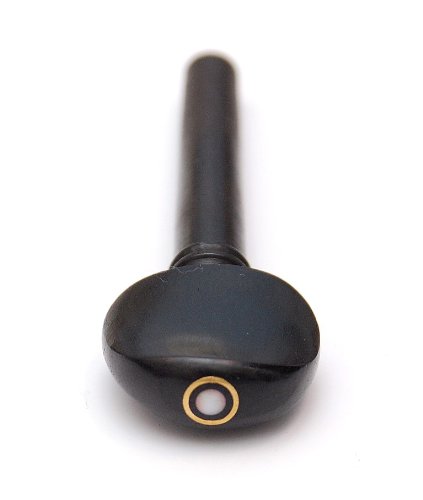
Pegs For Violins, Violas & Cellos- Ebony, Rosewood or Boxwood?

Written by Andy Fein, luthier at Fein Violins

Violins4you Violin Peg Ebony One 1 With Pearl Dot Inlay / Parisian Eye
Ebony Violin Pegs with Parisian Eyes

Ebony, Rosewood or Boxwood. Those are usually the three choices of wood for pegs on stringed instruments. What's the difference? Probably not much beyond wood color and looks. But in stringed instruments, everything makes a difference. Considering that your pegs are the functioning unit on your instrument that enables you to tune, the pegs are very, very important.

Thursday, October 13, 2011

The Realist Violin:
Electric/Acoustic playing at Its Finest!

Written by: Amy Tobin of Fein Violins

I am a violinist who is always looking for new and different things to do, both musically and technically. As a result, I have found myself in many situations where I needed to play amplified. I have used fully electric violins, acoustic-electric violins, and various pickups on my own violin, all for different reasons and to different effects. One of the reasons I have used so many different kinds of instruments is that I never really found one that satisfied my yearning for a rich, warm, full sound while playing plugged in. That is, until now.

Meet...............

THE REALIST!
The David Gage Realist RV4 Violin

Sunday, October 9, 2011

New or Old. Which is Better for Violins, Violas & Cellos?

Written by Andy Fein, Luthier at Fein Violins

I'm often asked: "Which is better? A new instrument or an old one?"

There is a mystique about old instruments. After all, Stradivarius & Guanerius were making instruments in the 1700s. Aren't all old instruments better than new ones? Well, yes and no. It depends on what you are interested in.

Stradivarius and Guarnerius made new instruments. Seems like a simple and intuitively obvious statement, but not everyone realizes that. Yes, Stradivarius, Amati, the Guarneris, Guadagnini, Montagnana, Vuillaume, Lupot, and the Chanot/Chardons were all real people. Real people making brand new instruments. Did they sound good when they were made? Probably, but we have no real way of knowing that. But judging from the people that played them and loved them, they were very nice sounding new instruments.

There were also a bunch of other makers from the 1500s on through the 1900s ( and even today)  that made passable, mediocre and downright lousy instruments. Are those old instruments better than a good sounding new instrument? Probably not.

Here are some considerations.

Sunday, October 2, 2011

Pinchas Zukerman and a Circle of Friends

Written by Andy Fein, luthier at Fein Violins

My life has brought me many interesting intersecting circles.

The neighborhood I grew up in, Haddontowne in Cherry Hill, NJ, was filled with working musicians and artists. Many of my neighbors and parents of my friends were in the Philadelphia Orchestra. It was through neighborhood gatherings that I first met Herb Light, a violinist with the Philadelphia Orchestra and his wife, a fine pianist Yoheved (Veda) Kaplinsky. Veda is now a piano professor and chairperson of the piano department at Juilliard. When I was growing up in the 1960s and 1970s, I knew her as a really, really good piano teacher and performer.

Veda is from Israel and knew Pinchas Zukerman from their days as young star musicians in Israel. I first met Pinchas through Herb & Veda. But, honestly, I was a somewhat oblivious kid and it didn't really register on me who I was meeting.

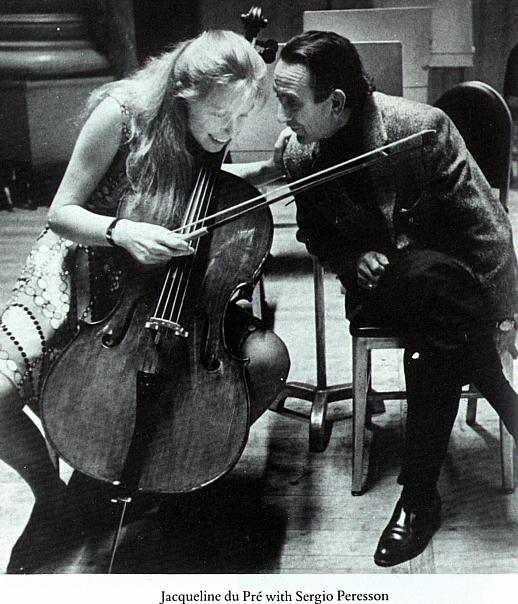
When I was in college, Herb casually told me about a great violin maker in the town next to ours. Sergio Peresson was working in Haddonfield, NJ. Many famous musicians were commissioning instruments from him. At the time, he was working on a violin for Pinchas Zukerman. I was interested in violins and violin making and Sergio graciously let me visit him in his workshop. While I was there, I watched him work on the violin that would become Pinchas'.

image from cello.org


Sunday, September 25, 2011

Five Things You'll Need to Start the Season Off Right & Sound Your Best

By staff at Fein Violins

It's the end of September and the weather and temperature have settled into the next season: Fall. Auditions everywhere are being held, and orchestras and ensembles are beginning to start again as well. There are a few things you can do as a player to create better sound, and keep your instrument in its best mode. Now is the perfect time to do it!
  1. Straighten Your Bridge.
    Check to see if your bridge is still on correctly.
    I was preparing for an audition the other day, and while practicing I noticed that sometimes my strings gave out a false sound. With an upcoming audition, I wanted all the sound I played to be fluent and pure. But my bridge was leaning forward, out of position and preventing me from creating that sound. The vibration of the bridge is what translates the vibrations of the strings to the instrument. After I straightened my bridge, my violin played much more like its old self. I didn't have any more distractions for my audition, which helped me focus on playing. If you're not comfortable adjusting your bridge, bring it to your violin shop, where your luthier should be more than happy to help. You'll need your luthier for the next few steps as well.


Saturday, September 17, 2011

Anne Akiko Meyers:
The Girl with Two Stradivarius Violins ( & a del Gesu!)

By: Debra Krein of Fein Violins

Anne Akiko Meyers is one of the greatest violinists of our time. (Not to mention, she's gorgeous!)

Anne Akiko Meyers Stradivarius Violin
Photograph by Andrew Eccles

Do you find classical music boring? Think it's too old school and just plain dull? I'm a classically trained violinist, but personally, I would rather listen to hip-hop music than classical music any day of the week. Yet, one listen to any of Anne's numerous recordings and even the greatest skeptic will be moved, as you can literally feel the emotion emanating from Anne's awe-inspiring performances on her violin.

Speaking of her violin, Anne Akiko Meyers owns two pretty awesome Stradivarius violins. TWO!

Sunday, August 21, 2011

The Cheapest Violins - Maybe Not Such A Good Deal

Written by Andy Fein, luthier at Fein Violins
 and Angie Newgren

As time passes and technology improves, the number of people worldwide who shop online continues to rise. It's easier for customers to shop and see what's available, and our shop's online store has given us customers and friends from all over the world! But how do you know when you cross a deal for violins, violas or cellos that is too good to be true? This blog explains why the cheapest violin (viola or cello) you find online (or in a store) is the wrong violin to purchase. Visit our other blog  Finding Your Violin Online to read about purchasing the right one for you!

If you're just starting out, it's hard to fathom why you should spend any more than the cheapest price you can find. Unfortunately, stringed instruments are pretty hard to learn and if everything (& I mean EVERYTHING!)  is not set up pretty close to perfect it makes it almost impossible to learn to play. In fact, the set up on a beginner instrument is just as important as on a fine soloist instrument.

Violin Values range from under 100 dollars to over 100,000 dollars.